07/20/2026. Remarks by
Johan Visschedijk: "In 1946 Bell developed the Model 42, its new general utility helicopter of larger dimensions than the Model 47.
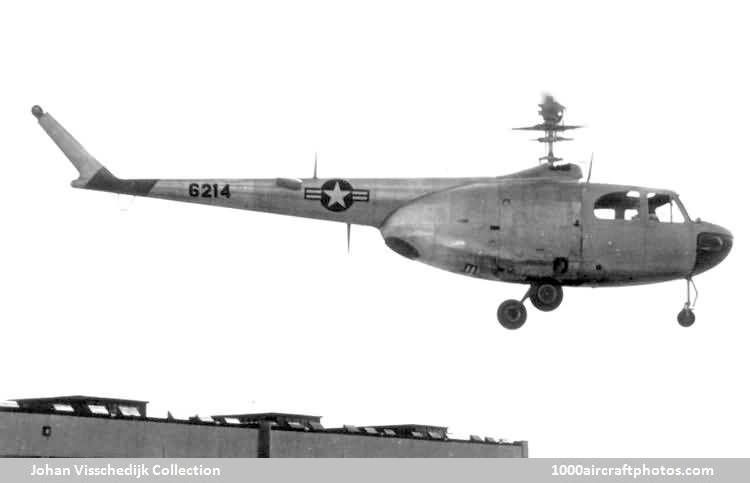
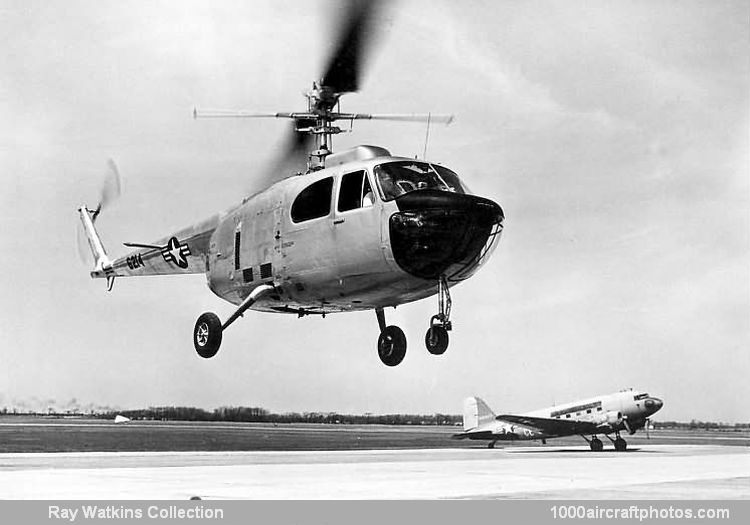
Bell 48 XR-12 (46-214) (
Ray Watkins Collection)
The USAAF ordered two prototypes of a military derivative of the Model 42, the Model 48, designated XR-12 (s/n 46-214 c/n 1 & 46-215 c/n 2) as well as a static test airframe. This contract represented the USAAF's first helicopter procurement from the company and prescribed missions for the XR-12 included personnel evacuation, cargo transport, observation, liaison, general cooperation with ground forces, etc.
In fact the Model 48 was quite similar to its civil counterpart, the
Model 42. The general configuration was retained with a large two-blade rotor with stabilizing bar, three-wheel non-retractable undercarriage and streamlined five-seat cabin with car-like windscreen and doors. The engine was a 540 hp Pratt & Whitney R-1340-AN-1 Wasp radial mounted horizontally in the rear fuselage with radiator air intake on top. Alternative equipment included flotation gear for water operation (which was tested on aircraft s/n 46-215), rescue hatch and hoist, litters and life rafts. A first production batch of 34 examples (R-12A, s/n 47-491 to 47-524) was ordered but never built, this order was cancelled in 1947.
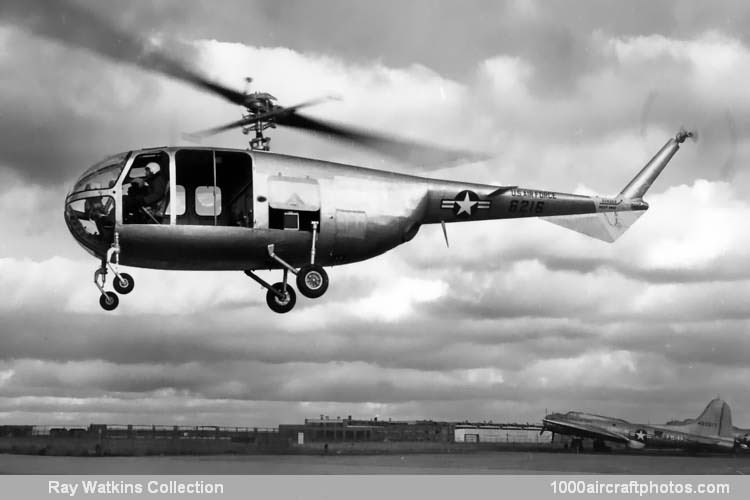
Bell 48A XR-12B (46-216) (
Ray Watkins Collection)
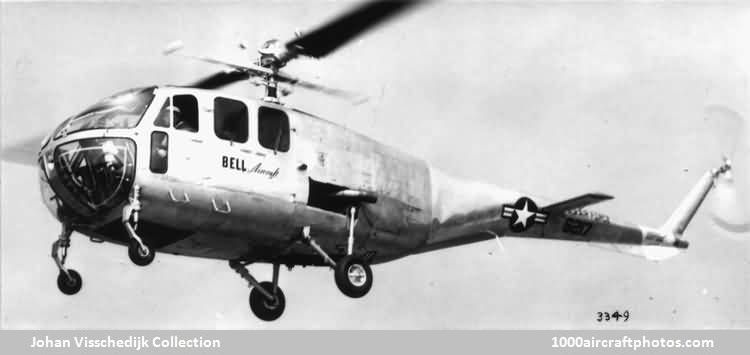
Meanwhile, the USAAF had ordered a prototype of an enlarged variant, the Model 48A, designated XR-12B (s/n 46-216 c/n 3), able to carry up to ten people.
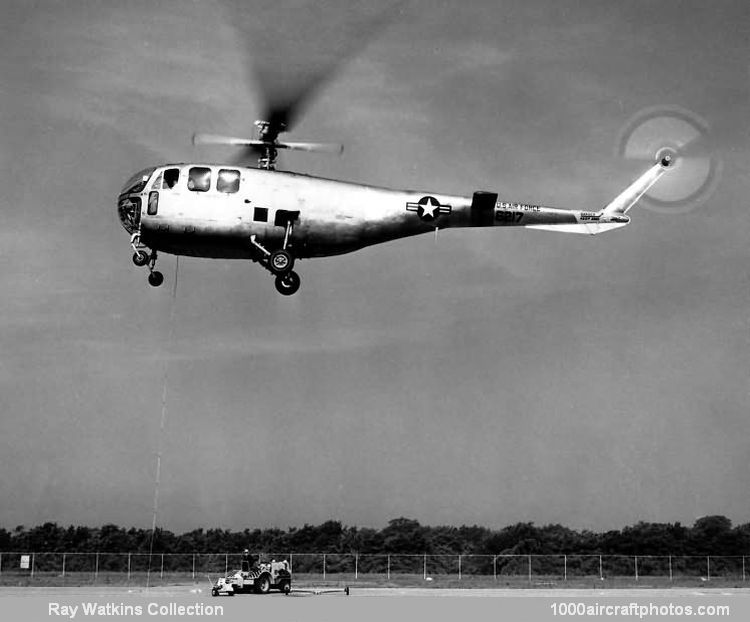
Bell 48A YR-12B (46-217) (
Ray Watkins Collection)
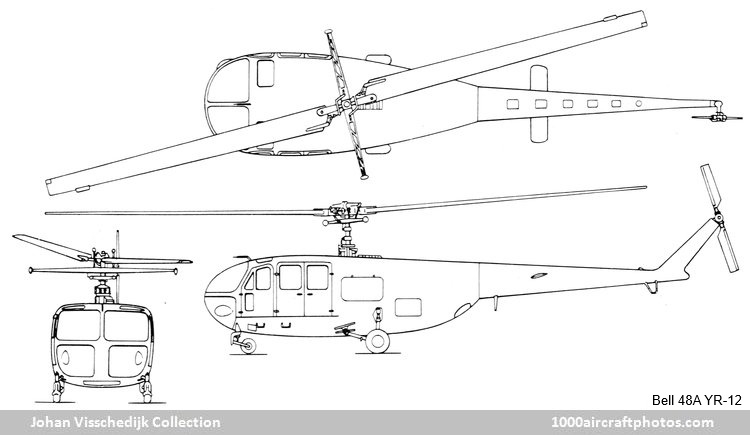
The Model 48A was followed by a batch of ten similar service trials YR-12Bs (s/n 46-217 c/n 4 to 46-226 c/n 13) with the more powerful 600 hp Pratt & Whitney R-1340-55 Wasp. The YR-12B was quite different in shape and the undercarriage had four wheels (wheel base 10 ft 10 in, 3.30 m; wheel track 7ft 0 in, 2.13 m). The wider cabin had separate doors for the crew and passengers and the nose was nearly all-glazed. Horizontal stabilizers were fitted each side of the tail boom. The anti-torque rotor was now located on the port side of the tail-boom end.
Initial deliveries of the YR-12Bs were scheduled for the summer of 1946. However, Bell was faced with serious engineering difficulties with the prototype. The difficulty centered around the main rotor system. Serious blade weaving and rotor governor trouble were encountered. That is why, in April 1946, Bell accepted the assistance of the Propeller Laboratory at Wright Field to overcome these problems.
In May 1946, the USAAF considered that the YR-12 'was going to require considerable development and time delay before it was a successful ship' and procurement of the heavier Sikorsky S-51 was then considered.
Bell 48A YR-12B (46-217)
Delivery of the first of ten service trials YR-12B was in September 1946. Flight tests went smoothly but no production batches of the R-12B were ordered. In 1948, the Bell Model 48 XR-12 and 48A XR-12B and YR-12B were respectively redesignated XH-12, XH-12B and YH-12B. They were used for a variety of test programs before being withdrawn from use. None of them is known to have survived.