06/30/2014. Remarks by
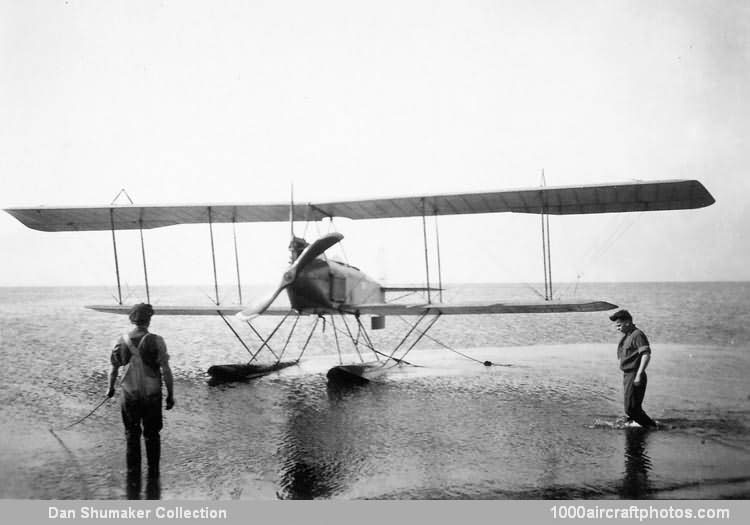
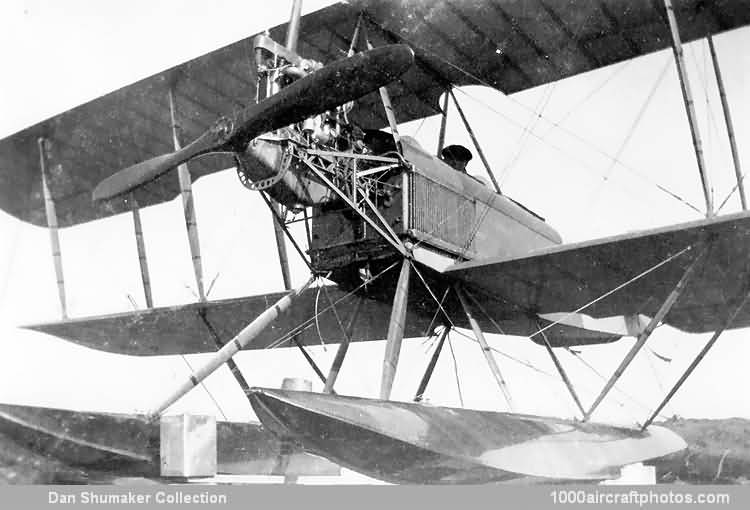
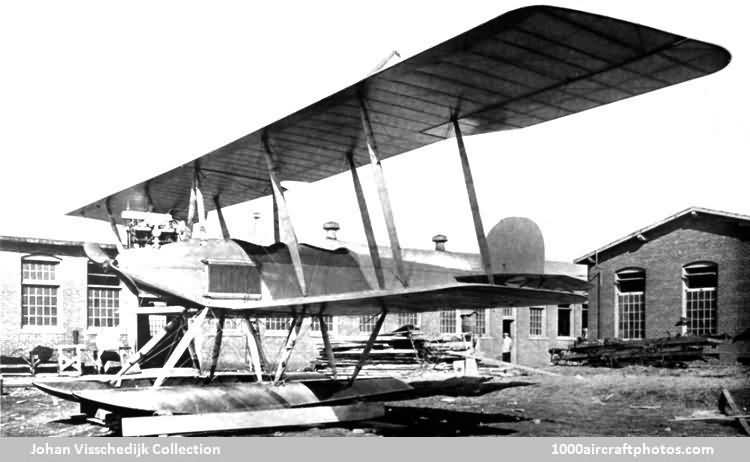
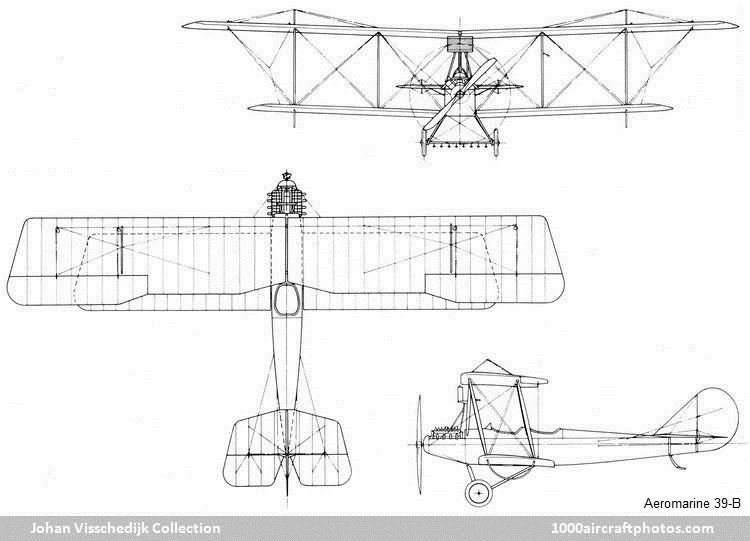
Johan Visschedijk: "In 1917 the USN placed with the Aeromarine Plane and Motor Company of Keyport, New Jersey, what was at that time the largest single order for Navy aircraft 50 of the Model 39-A (BuNos. A-450 to A-499) and 150 39-B trainers (BuNos. A-500 to A-649). These were conventional two-bay wood and fabric biplanes and could be fitted with wheels or floats.
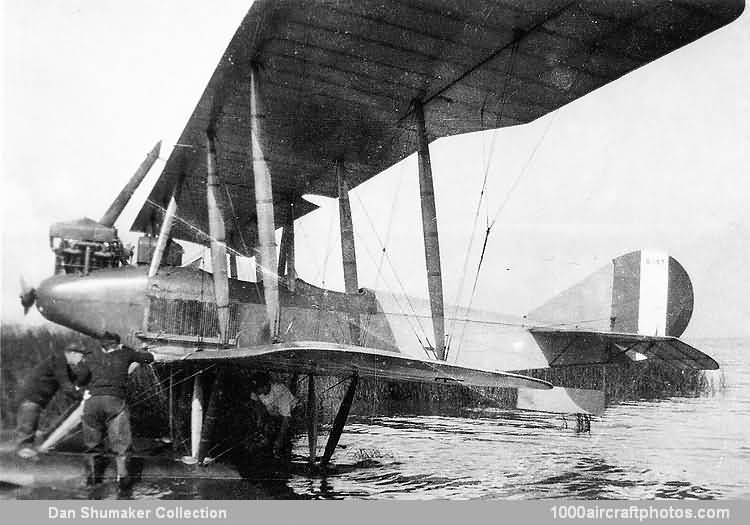
39-A (A-450) (
Johan Visschedijk Collection
The first 39-A aircraft was delivered in June 1917.
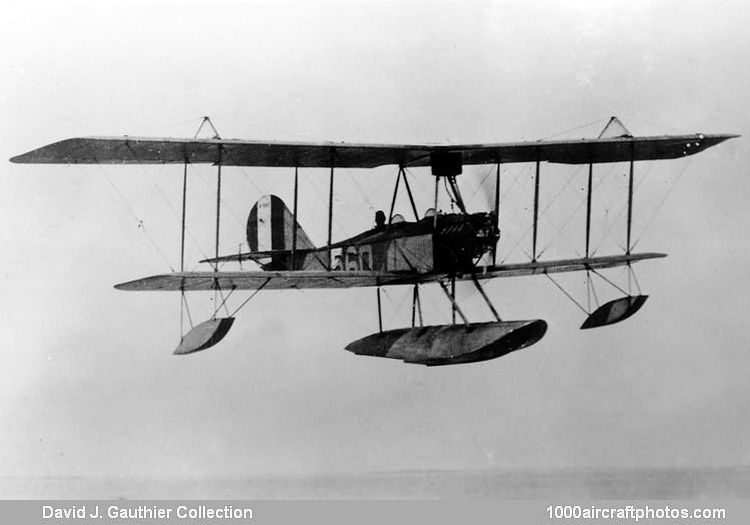
39-B (A-560) (
Davis Gauthier Collection)
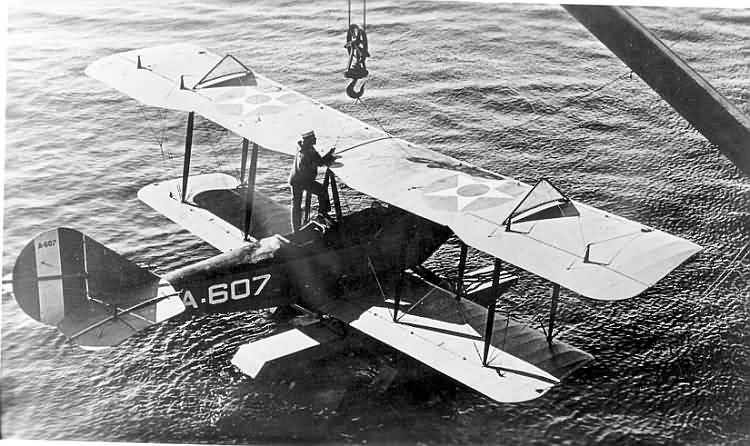
The 39-B was powered by the 100 hp Curtiss OXX-6 eight-cylinder liquid-cooled V-engine with cabane mounted coolers, the seaplanes having the single main pontoon with small wing tip floats for stability which the Navy preferred for its training and service seaplanes and was to retain until seaplane trainers were dropped from the inventory in 1960.
39-B (A-607) (
Davis Gauthier Collection)
A number of the 39-Bs survived WW I, and two were used for the Navy's early experiments in deck landing. Various types of arrester gear were tried on a dummy carrier deck at Langley Field, Hampton, Virginia, in 1921. The aircraft was fitted with the forerunner of the modern hook that engaged the cross-deck arrester cables, while alignment hooks were fitted to the landing gear to engage longitudinal wires on the deck to keep the machine running straight. In anticipation of forced landings at sea in the course of later operations from shipboard, a hydrovane was fitted ahead of the wheels to prevent nosing over on alighting.
On October 26, 1922, a 39-B piloted by Lt.Cdr. Geoffrey DeChevalier, Naval Aviator No. 7, made the first landing on the deck of the Navy's first aircraft carrier, the USS Langley, a converted collier. This was nine days after the first take off had been made in a
Vought VE-7.
39-A
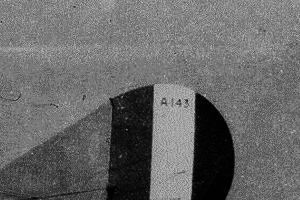
/ / / / / / / / / / / / / / / / / / / / / / / / / / / / / / /(A-143)
The pictured 39-A shows in error on the fin the BuNo. A-143, actually that was allotted to an Aeromarine 700, which was a three-bay biplane."