W.T. LARKINS MEMORIAL COLLECTION
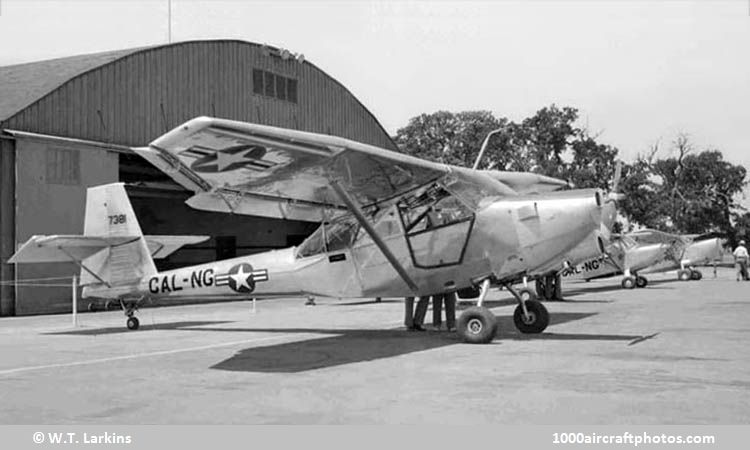
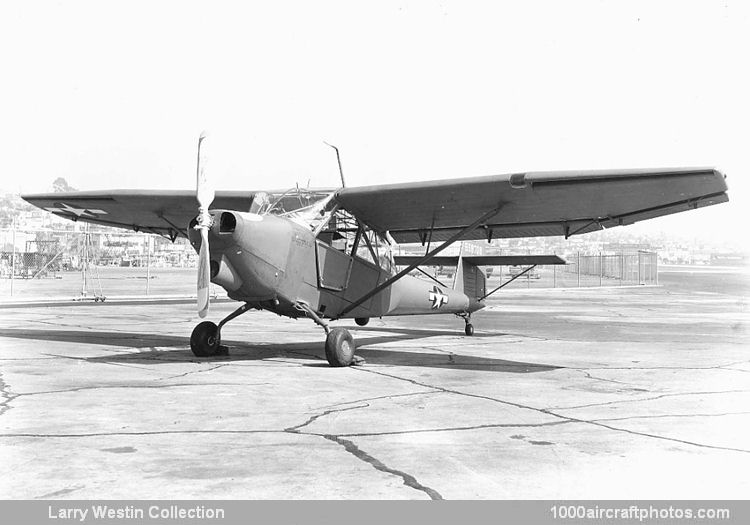
No. 12779. Convair 105 L-13A (47-381 c/n 261) US Air Force
No. 12779. Convair 105 L-13A (N5054Y)
No. 12779. Convair 105 L-13A (N75375 c/n 92)
Photographed by W.T. Larkins
04/30/2015. Remarks by
Johan Visschedijk: "Designed by the Stinson Division, the Model 105 was intended as a follow on to the
L-5 series.
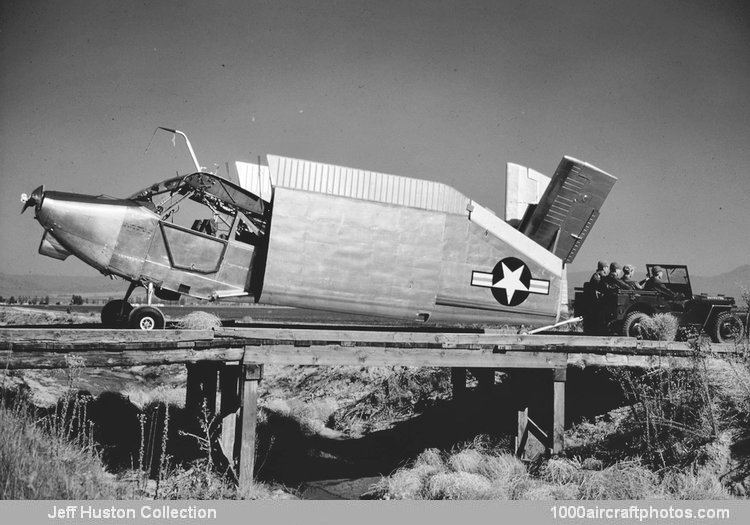
Convair 105 L-13A (
Jeff Huston Collection)
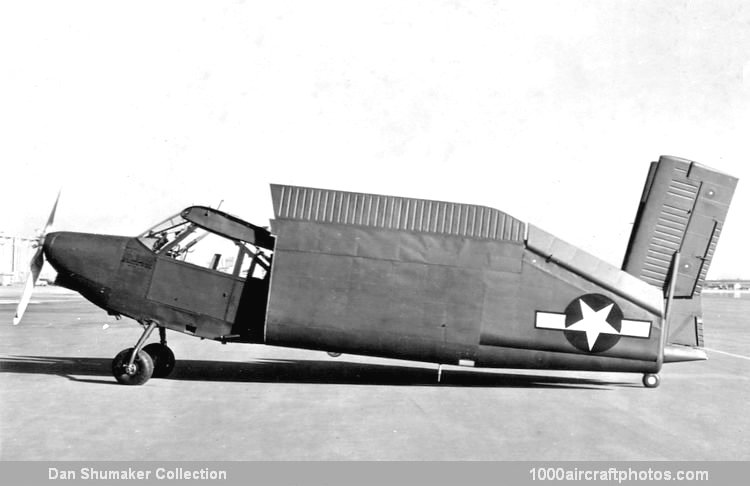
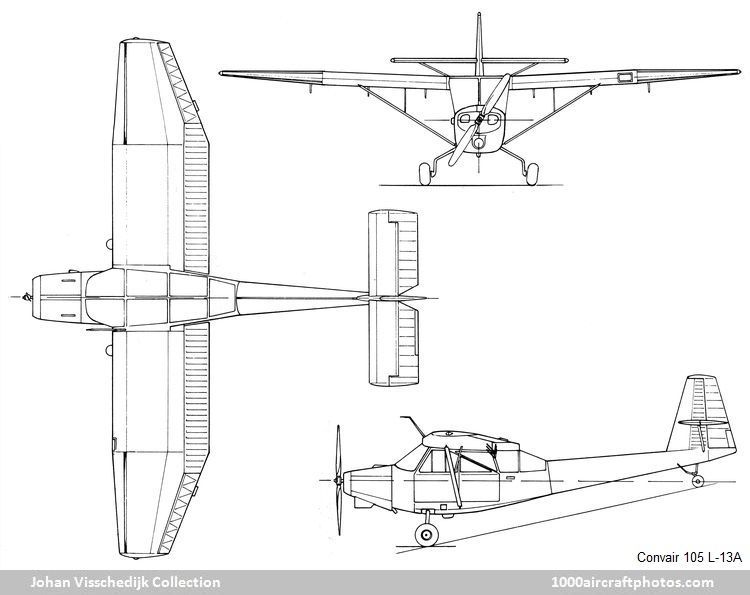
Powered by a 245 hp Franklin O-425-5 flat-six air-cooled engine, this all-metal general liaison, observation, and ambulance aircraft featured, as shown above, wings that folded back alongside the fuselage, and a tail plane that folded upwards. Furthermore it had landing wheels which swivelled round and toed inwards to ease ground handling. The high-lift, two-spar wing of airfoil
NACA 43012A was in two sections, each with 25 sq.ft (2.32 sq.m) of trailing edge area, slotted flaps and a fixed leading edge slot.
Without removing the two-blade variable-pitch wooden propeller, the aircraft could be towed in glider fashion at up to 150 mph (241 kmh) and released in flight, offering a substantial increase in range. Normal crew complement was two side-by-side and a third aft, but up to six could be carried in an emergency. Two doors were installed on the starboard side and one on the port side and the windows sloped outwards to improve vision. Skis or floats could be fitted.
Stinson 105 XL-13 (45-58708) (
Larry Westin Collection) APS No. 4427
Stinson 105 XL-13 (45-58709) (
Dan Shumaker Collection) APS No. 4435
Stinson, a subsidiary of Consolidated Vultee (also known as Convair), designed the L-13 at their Wayne, Michigan facility, and under the USAAF designation XL-13 (serialed 45-58708, 45-58709), two prototypes were built and flown by Stinson.
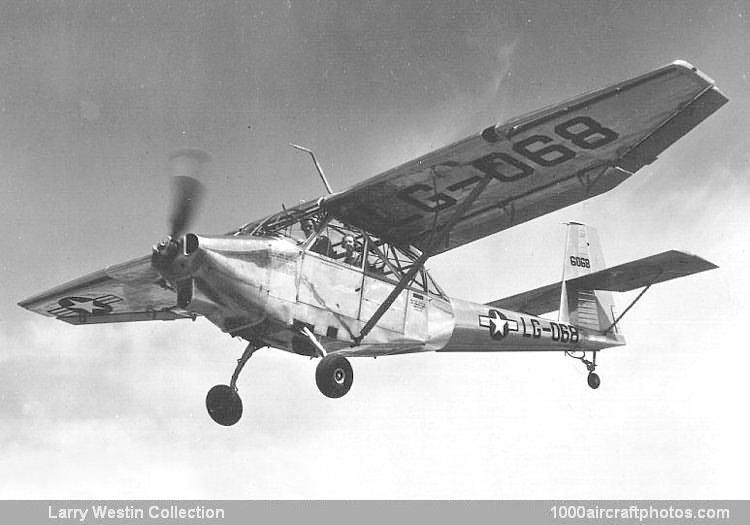
Convair 105 L-13A (46-068) (
Larry Westin Collection).
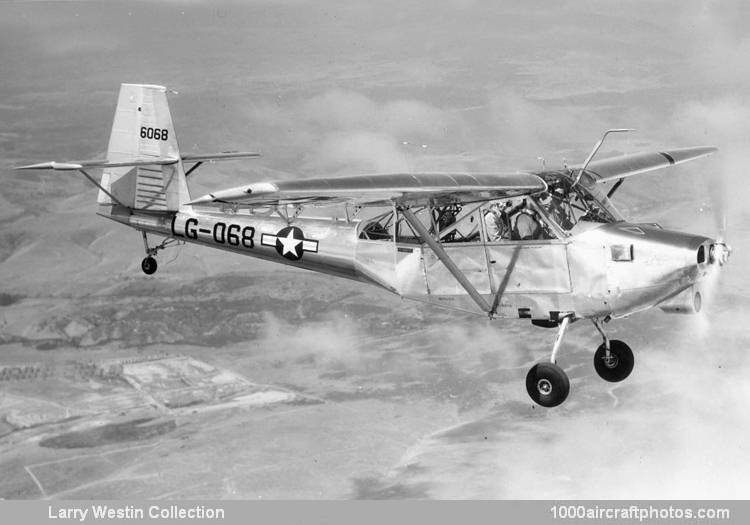
Convair 105 L-13A (46-068) (
Larry Westin Collection)
Flight tests resulted in an order for 300 L-13As (s/n 46-68 to 46-213, 47-267 to 47-420) built by Consolidated Vultee (Convair) at San Diego with the 250 hp O-425-9 engine, 48 aircraft went directly to ANG units. Following tests with the sixth production aircraft (s/n 46-73), 28 aircraft (s/n 46-110 to 46-111, 47-395 to 47-420) were converted to L-13B standard for Arctic use with the installation of a special combustion heater and ducting.
In the mid-1950s, surviving USAF aircraft were disposed of as surplus. A restricted certificate (AR-10) was issued to Lester Branchflower, Burbank, California, for stock L-13As, but as this category limited sales several conversions were undertaken by others. The Longren Aircraft Co, Torrance, California, bought a number of surplus L-13s and converted one L-13B, registered N4901V (c/n 282, ex-47-402), as a six-seat bush aircraft in the standard licensing category called the Centaur 101 in 1958 with additional fin area and a 300 hp Lycoming R-680-E3 radial engine. The actual modification was undertaken by C. Roger Keeney's ACME Aircraft, also at Torrance, who also fabricated a few Centaur 100s, and subsequently, the Centaur 102 was also produced with a Jacobs R-755-A2 engine.
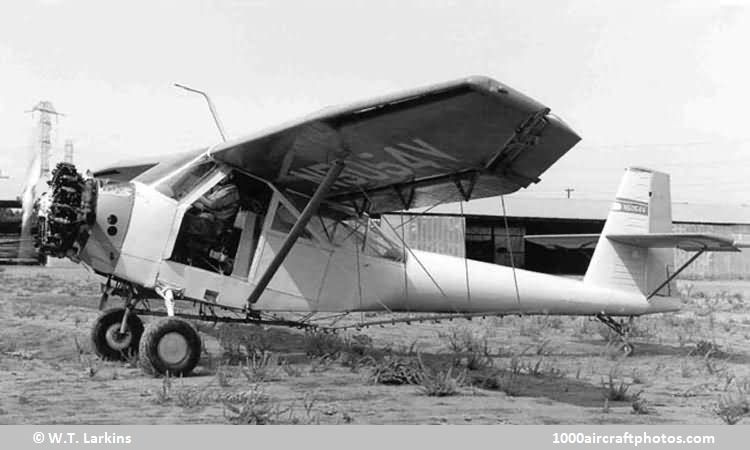
Convair 105 L-13A (N5054Y)
This L-13A came on the civil register as N5054Y was converted to an agricultural sprayer, the Franklin engine was exchanged for a radial engine. No further details available.
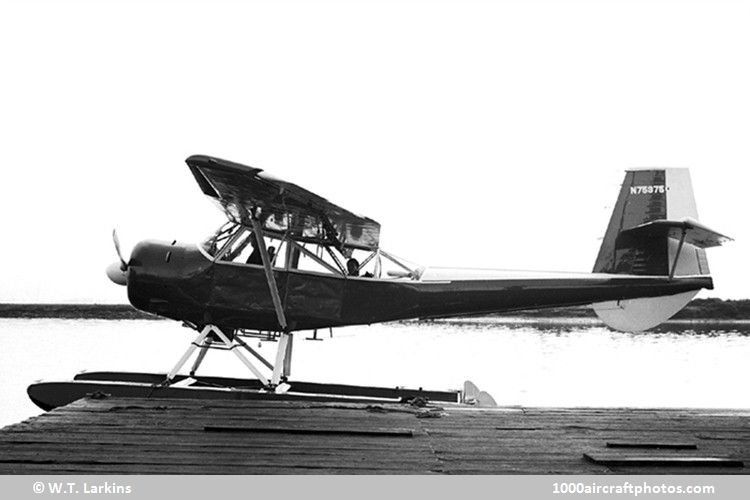
Convair 105 L-13A (N75375)
Built for the USAAF under serial 46-159, this aircraft was registered N75375 in 1955, and subsequently fitted with floats and a radial engine. From October 9, 1958 till September 9, 1960 it was registered to the Utah Construction Co. at San Francisco, California. Thereafter it went to Mexico where it became XB-JOE, in 1978 it was reregistered as XA-PUC, new owner was P. Covarrubias of Ciudad Guzman, Jalisco. By 2003 the aircraft was withdrawn from use and had become a derelict.
Caribbean Traders Inc. in Miami, Florida converted a number surplus L-13s as Husky Is (250 hp Franklin O-425-9), Husky IIs (300 hp Lycoming R-680-13), and Husky IIIs (450 hp Pratt & Whitney R-975-7). All models except the Husky I featured a swinging engine mount and quick-disconnect firewall fittings for easy maintenance and a constant-speed Hamilton Standard metal propeller replaced the original airscrew. Husky IIs were used by at least two airlines, Compañia Dominicana de Aviación (registered HI-28 and HI-31) and SATGA - Société Aérienne de Transports Guyanna-Antilles (registered F-OGAS) based at Cayenne, French Guiana. The latter flew to Martinique, Guadeloupe and other islands in the Lesser Antilles chain, and into a 300 ft (91 m) strip in French Guiana to supply a mining operation (a twenty-minute flight over a one-week journey by boat, horse, and foot). Other Husky IIs were sold in Mexico and Bolivia."
Created April 30, 2015