04/30/2010. Remarks by
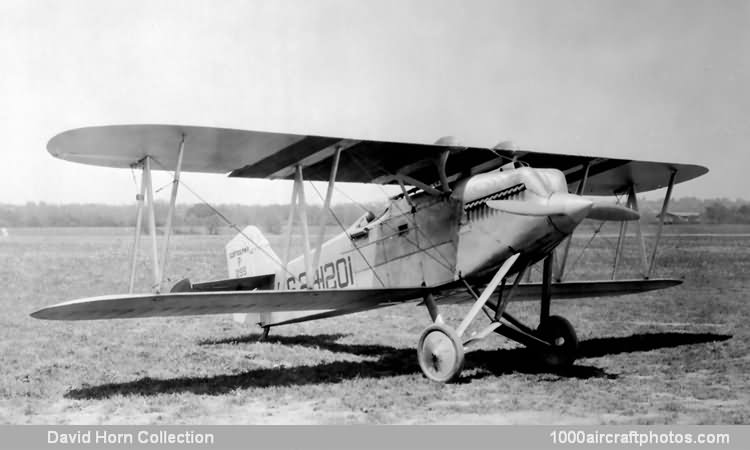
Johan Visschedijk: "Progenitor of the famous Hawk series of fighters, the PW-8 (the 'PW' prefix indicating 'Pursuit Water-cooled') was a single-seat two-bay fighter biplane of mixed construction, untapered plywood-covered wooden wings and fabric-skinned welded steel tube fuselage, powered by a 438 hp Curtiss D-12 twelve-cylinder liquid-cooled V-engine. Three prototypes were ordered on 27 April 1923, s/n 23-1201 to 23-1203.
The first XPW-8, flown in the previous January, was delivered to McCook Field, Dayton, Ohio, and received Project Number
"P-295". It was retroactively designated XPW-8 on May 14, 1924, and surveyed February 21, 1925.
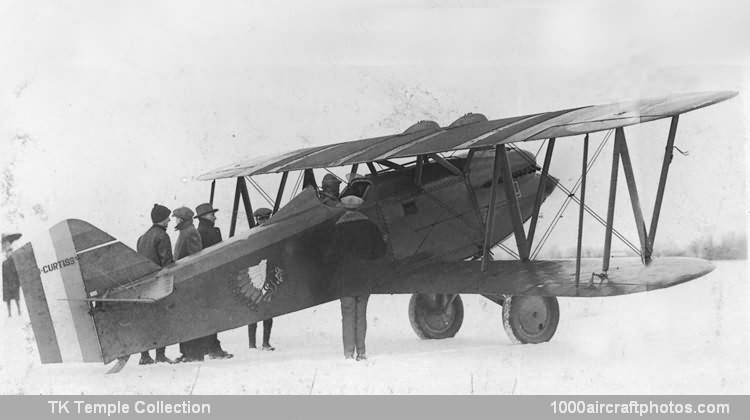
PW-8 (
T.K. Temple Collection)
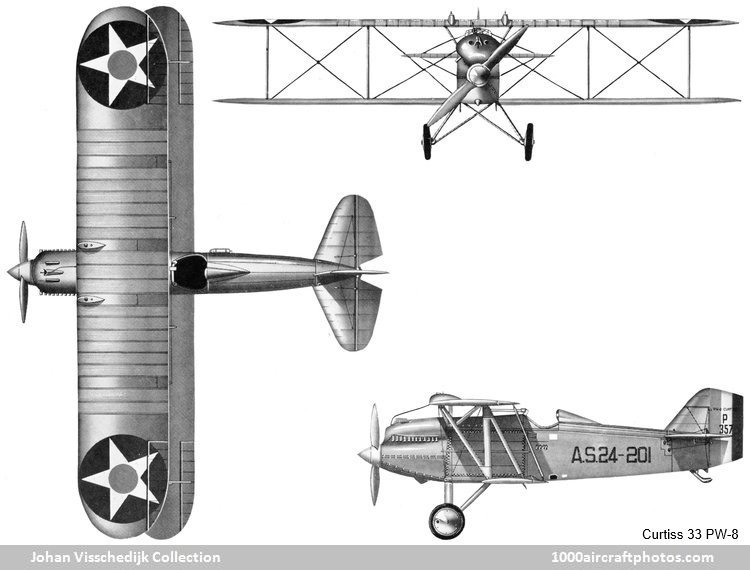
The second XPW-8, s/n 23-1202, flown in March 1924, embodied some aerodynamic refinement and provided the basis for the production PW-8, 25 examples (s/n 24-201 to 23-225) being ordered on 25 September 1923 and delivered between June and August 1924.
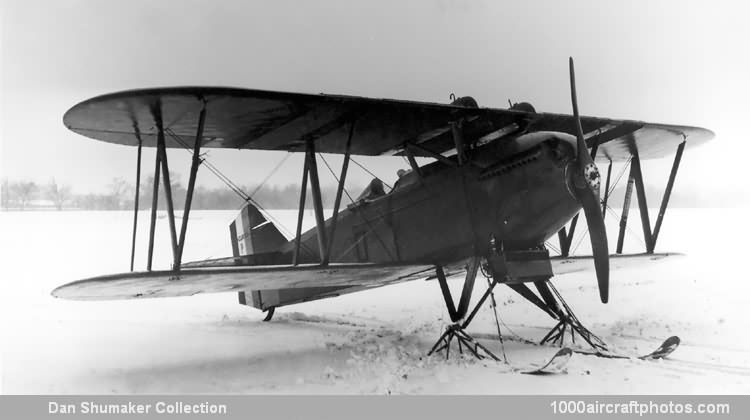
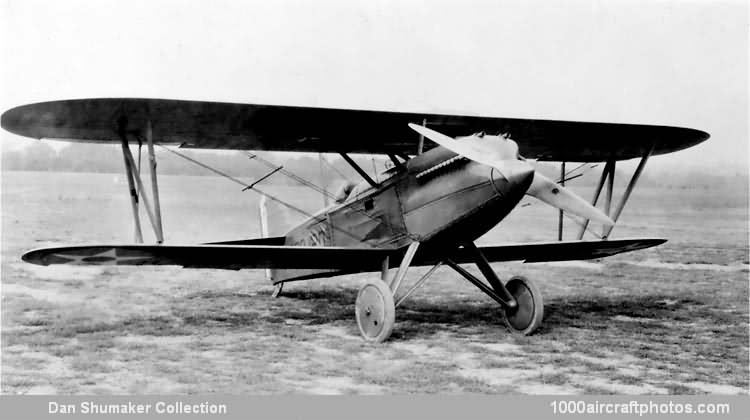
PW-8 (24-202) (
Dan Shumaker Collection)
The PW-8 featured wing surface radiators and armament normally comprised two 0.3 in (7.62 mm) machine guns, and a turbo-supercharger was experimentally fitted to the second production aircraft, s/n 24-202. 23-1202 received McCook Field Project Number
"P-333", and was written off at Selfridge Field on June 30, 1924.
XPW-8 (23-1203) (
Dan Shumaker Collection)
The third XPW-8, s/n 23-1203, that was delivered in February 1924 to McCook Field with the Project Number
"P-364", featured 30 ft (9.14 m) span single-bay wings, and with this aircraft Lieutenant Russell L. Maughan set a new transcontinental speed record on June 23, 1924, of 21 hr 50 min, with only five refueling stops.
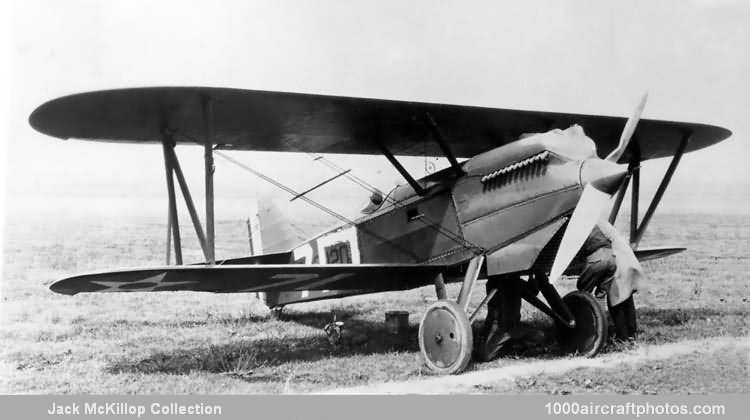
XPW-8A (23-1203) (
Jack McKillop Collection)
It was subsequently fitted with a tunnel-type radiator, redesignated XPW-8A, and in December 1924 it became the Model 34 XPW-8B, fitted with 31 ft 6 in (9,60 m) span wings of tapered planform and Clark Y airfoil. It thus became, in effect, the prototype P-1 Hawk. It was surveyed May 5, 1925."