07/20/2026. Remarks by
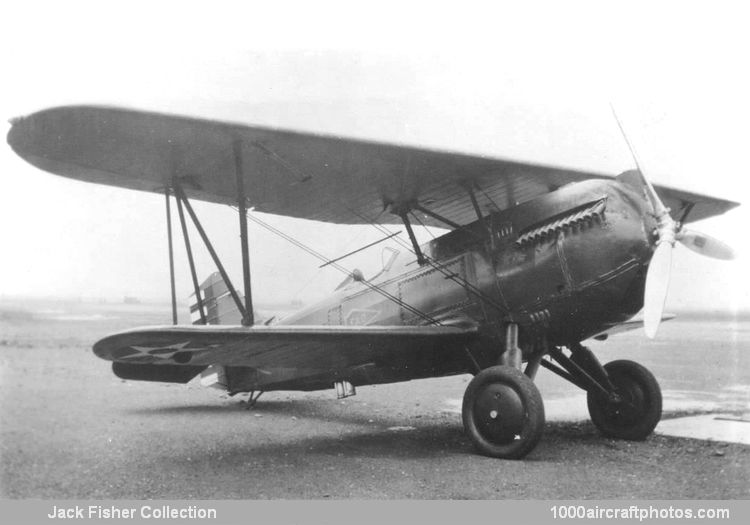
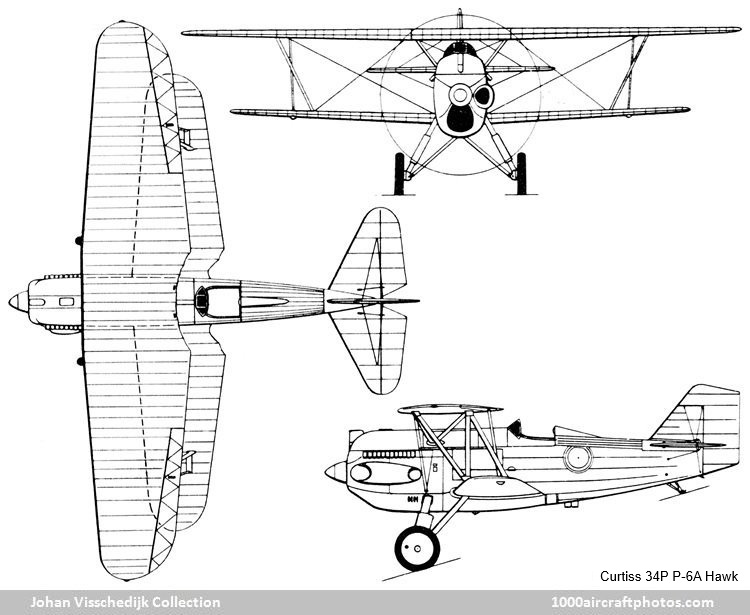
Johan Visschedijk: "The P-6 series (Models 34 and 35) resulted from installation of the new 600 hp V-1570 Conqueror engines in what were essentially P-1C airframes. The V-1570 was a direct development of the D-12 by way of the V-1400 engine.
The fourth P-2 (Model 34B, serial 25-423) became the prototype of the P-6 line when fitted with the V-1570 engine. Designated XP-6 (Model 34P) and stripped of military equipment, it was placed second in the unlimited event of the 1927 National Air Races, September 21 to 25, at Felts Field, Spokane, Washington.
The XP-6A No.1 (Model 34Q, 26-295) was an extensively modified P-1A as a racer for the same 1927 National Air Races. With a boosted Conqueror in a PW-8 style nose, it was fitted with XPW-8A wings and PW-8 surface radiators. It came first in the unlimited event at 201 mph (323.47 km/h) on the closed course. (It was lost in a crash during preparations for the 1928 races.)
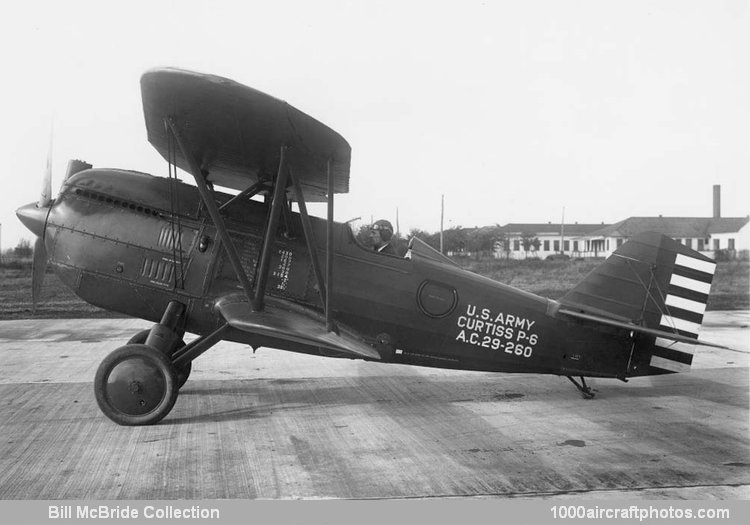
34P P-6 Hawk (29-260) (
Bill McBride Collection)
The success of the Curtiss Conqueror engine in these two racing aircraft prompted on October 3, 1928, an USAAC order for a service test quantity of eighteen P-6s (serialed 29-260 to 29-273, 29-363 to 29-366) with 600 hp V-1570-17 engines. They differed noticeably from the XP-6 in having the fuselage rounded out to match the fatter engine cowling, which was itself more rounded in front and side elevations than the old P-1 type and the XP-6. These service test aircraft were given the company designation Model 34P. The Y-for-service-test designation had just been adopted at this time, but it does not appear to have actually been applied to these planes, although they are sometimes recorded as YP-6s.
The development of ethylene glycol (Prestone) coolant in place of water, with its lower freezing and higher boiling points, allowed the use of a smaller radiator with a marked reduction of gallons. This meant, reduced drag and weight, with a resultant increase in performance. The Prestone-cooled engine was designated V-1570-23. However, since the new engines were not ready, nine aircraft, serialed 29-269 to 29-273 and 29-363 to 29-366, were delivered in October 1929 with water-cooled V-1570-17 engines as P-6s. Two additional P-6s resulted from the conversion of P-11s 29-367 and 29-368.
The remainder of the initial P-6 order (29-260 to 29-268) with the Prestone-cooled engine were delivered in 1930, at delivery the P-6s were redesignated P-6A. Eventually, the all P-6 aircraft were brought up to P-6A standards.
The XP-6A No.2 was not a prototype, it was the fourth P-6A (29-263) used for test work. Eventually it was again designated P-6A and assigned to Wright Field, Ohio, with the Project Number
"P-586". It was withdrawn from use at Pontiac, Michigan on December 15, 1931.
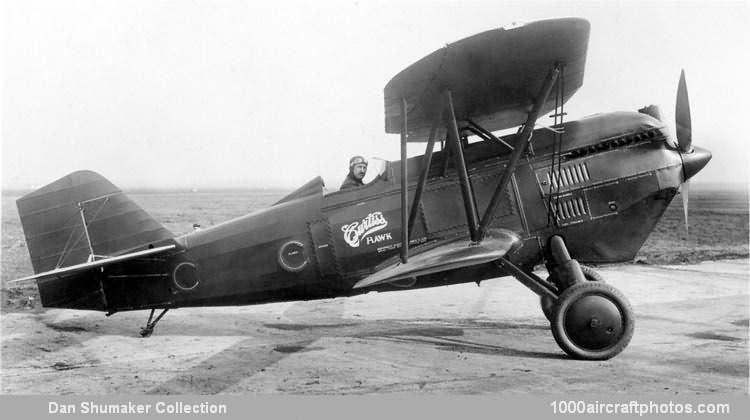
34O XP-6B Hawk (29-259) (
Dan Shumaker Collection)
A third Conqueror-powered conversion of a P-1C airframe (29-259) was used for a long-distance flight from New York to Nome, Alaska in July 1929. Although not a prototype, it was assigned the designation Model 34O XP-6B. It was damaged in a forced landing on the return trip. It was converted back to a standard P-1C configuration and assigned to Wright Field, Ohio, with the Project Number:
"P-590".
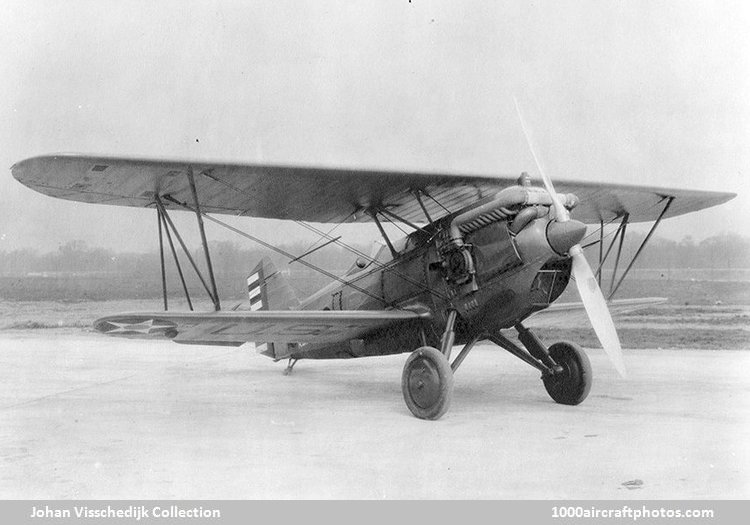
34P XP-6D Hawk (29-260) (
Johan Visschedijk Collection)
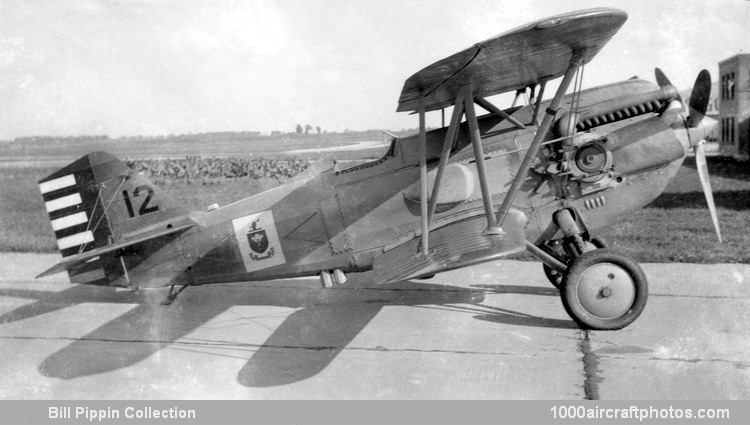
Despite the poor results obtained with the P-5, the Army continued its attempts to develop a satisfactory turbosupercharger. To this end, in April 1931, the first P-6A (29-260) was converted to a prototype with a turbo-supercharged Curtiss V-1570C engine and was designated XP-6D. With this powerplant it was able to record a top speed of 197 mph (317 kmh) at 15,000 ft . The penalty for this bulky installation was paid at sea level, where there was a marked reduction in top speed. After the testing of the XP-6D had been completed, the prototype was reverted to the P-6A.
34P P-6D Hawk (
"12") (
Bill Pippin Collection) APS No. 1792
The results of tests, however, warranted in 1932 the conversion of all remaining P-6 and P-6A aircraft at the Fairfield Air Depot to the same standard with Form F-2F superchargers; they then became P-6Ds. Outwardly, the P-6D differed from the XP-6D only in change to three-bladed propellers to increase performance at high altitude. The P-6Ds were assigned to Langley Field, Hampton, Virginia, for service trials."